For more intellectual property updates follow our WHATSAPP CHANNEL and SUNS LEGAL | LinkedIn
INTRODUCTION
This matter pertains to a rectification petition filed under Section 50 of the Copyright Act, 1957, by M/S New Bharat Overseas, challenging the validity of Copyright Registration No. A-130837/2019 granted to M/S Bhagwati Lacto Vegetarian Exports Pvt. Ltd. for the artistic work titled “GARIMAA GOLD.” The petitioner alleged that the registration was obtained in contravention of Rule 70(9) of the Copyright Rules, 2013, which mandates prior notice to any party claiming interest in or disputing the subject matter of the copyright. The Delhi High Court was called upon to determine whether the registration was legally sustainable in light of the petitioner’s prior rights and ongoing disputes concerning the impugned artistic work.
FACT OF THE CASE
M/S New Bharat Overseas has been engaged in the rice trade since 1978. It is the registered proprietor of the trademark “TAJ MAHAL” (No. 338004, registered on 30 November 1981) and “TAJ MAHAL” with the Taj Mahal device (No. 387177, registered on 15 December 1989), both under Class 30. Additionally, the petitioner holds Copyright Registration No. A-50558/1990 for the artistic work titled “TAJ MAHAL,” which is prominently featured on its packaging labels.
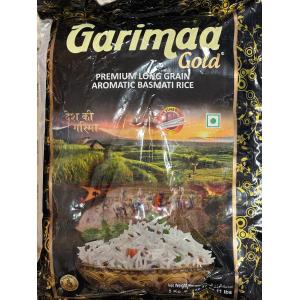
The petitioner’s grievance arose when Bhagwati Lacto began marketing rice under the label “GARIMAA GOLD,” which allegedly incorporated a similar depiction of the Taj Mahal. On 11 August 2017, the petitioner lodged a complaint with the police, resulting in FIR No. 160/2017 against Bhagwati Lacto. During the investigation, products bearing the disputed label were seized, and a charge-sheet was filed on 9 September 2019. A second FIR, No. 11/54/2019, was registered on 28 March 2019 for continued misuse of the impugned artistic work.
On 25 June 2019, Bhagwati Lacto filed an application for copyright registration of the “GARIMAA GOLD” label. The registration was granted on 6 September 2019. The petitioner became aware of this registration only during proceedings before the Punjab and Haryana High Court, where Bhagwati Lacto had sought the quashing of FIR No. 160/2017. In 2022, the petitioner-initiated rectification proceedings before the Delhi High Court, seeking cancellation of the registration on grounds of procedural irregularity.
ARGUMENT IN FAVOUR
The petitioner contended that the registration was obtained in violation of Rule 70(9) of the Copyright Rules, 2013, which requires the applicant to notify any person who claims or has an interest in the subject matter of the copyright or disputes the applicant’s rights. It was submitted that Bhagwati Lacto failed to issue such notice, despite being aware of the petitioner’s prior rights and the existence of FIRs and pending legal proceedings concerning the same artistic work.
The petitioner further argued that Bhagwati Lacto had made a false declaration in paragraph 5 of Form XIV, which requires the applicant to confirm that there are no claims or disputes regarding the copyright. This omission, according to the petitioner, constituted suppression of material facts and indicated mala fide intent. Given its longstanding trademark and copyright registrations and continuous commercial use of the “TAJ MAHAL” label, the petitioner asserted that it qualified as an “interested person” under Rule 70(9) and was entitled to notice prior to the grant of registration.
ARGUMENT AGAINST
Bhagwati Lacto defended the registration by asserting that the impugned artistic work was a composite label comprising its registered trademark “GARIMAA GOLD” (TM No. 2991862, registered on 24 June 2015), the slogan “DESH KI GARIMAA,” and imagery including the Taj Mahal and rice. It argued that the petitioner could not claim exclusive rights over the depiction of the Taj Mahal, which is a public monument commonly used in trade.
In support of its position, the respondent cited Sections 52(s) and 52(t) of the Copyright Act, 1957, which exclude public monuments and architectural works from exclusive copyright claims. It also relied on Section 17 of the Trade Marks Act, 1999, which limits exclusive rights in composite trademarks to distinctive elements, thereby preventing isolation of common features for proprietary claims.
Bhagwati Lacto contended that the existence of FIRs did not automatically qualify the petitioner as an “interested person” under Rule 70(9), and therefore, it was not obligated to issue notice. It maintained that the Copyright Office had conducted a proper inquiry and granted registration in good faith based on the declarations made in the application.
COURT’S DECISION
The Delhi High Court held that the copyright registration granted to Bhagwati Lacto was procedurally flawed and invalid. The Court emphasized that Rule 70(9) of the Copyright Rules, 2013, imposes a mandatory obligation on applicants to notify any person who claims or has an interest in the subject matter of the copyright or disputes the applicant’s rights. The Court found that Bhagwati Lacto was fully aware of the petitioner’s claims and the ongoing legal proceedings yet failed to issue notice.
The Court concluded that the petitioner qualified as an “interested person” under Rule 70(9) due to its prior trademark and copyright registrations, continuous commercial use of the artistic work, and active legal contestation of the respondent’s label. The failure to notify the petitioner constituted a direct violation of the statutory provisions and rendered the registration procedurally invalid.
The Court clarified that it was not adjudicating the merits of the artistic similarity or the question of exclusive rights over the Taj Mahal. These issues were left open for determination by the Registrar of Copyrights. The focus of the judgment was solely on the procedural non-compliance with Rule 70(9).
The Court acknowledged the position of the Copyright Office, which stated that the registration was granted in good faith based on the applicant’s declaration, and that the responsibility for disclosure lay solely with the applicant. The Copyright Office had no objection to the cancellation or remand of the registration.
Accordingly, the Court revoked Copyright Registration No. A-130837/2019 and treated the original application as revived. It directed the petitioner to file objections within four weeks and instructed the Registrar of Copyrights to adjudicate the application afresh, uninfluenced by the Court’s observations on merits. The Registrar was asked to conclude the process within three months.
LEGAL PROVISIONS
Section 50 of the Copyright Act, 1957 empowers the Registrar or the Court to rectify the Register of Copyrights in cases of fraud or error. Rule 70(9) of the Copyright Rules, 2013 requires applicants to notify all persons who claim or have an interest in the subject matter of the copyright or dispute the applicant’s rights. Section 52(s) and 52(t) of the Copyright Act, 1957 exclude public monuments and architectural works from exclusive copyright claims, thereby preventing monopolies over national heritage. Section 17 of the Trade Marks Act, 1999 limits exclusive rights in composite trademarks to distinctive elements, preventing isolation of common features for proprietary claims.
CONCLUSION
The Delhi High Court’s decision in New Bharat Overseas v. Bhagwati Lacto Vegetarian Exports Pvt. Ltd. analyses the importance of procedural compliance in copyright registration, particularly where prior claims and disputes are known to exist. The judgment shows that applicants must act in good faith and disclose all relevant claims and interests, failing which the registration may be invalidated. The Court’s interpretation of Rule 70(9) ensures the rights of prior claimants and ensures that the registration process remains transparent and equitable. While the substantive issues regarding the artistic work remain open, the ruling observes that the petitioner’s objections will be duly considered in a fresh adjudication.