For more intellectual property updates follow our WHATSAPP CHANNEL and SUNS LEGAL | LinkedIn
Introduction
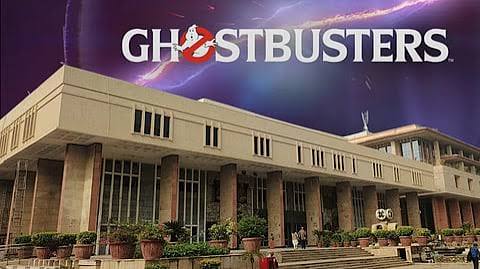
On 6 July 2026, the Delhi High Court, in Columbia Pictures Industries, Inc. v. Registrar of Trade Marks & Anr. (C.A.(COMM.IPD-TM) 44/2025; 2026: DHC:5378), addressed an appeal filed by Columbia Pictures Industries, Inc. under Section 91 of the Trade Marks Act, 1999. The appeal challenged the Registrar of Trademarks’ order of 16 April 2025, which had rejected Columbia’s opposition to the registration of the mark “GHOST BUSTER” in Class 05 for pharmaceutical and sanitary products. The case raised significant questions about the scope of protection afforded to well-known trademarks and the consequences of dishonest adoption.
Facts of the Case
Columbia Pictures, a major American film studio established in 1924, is the creator of the globally famous “Ghostbusters” franchise. The first film, released in 1984, became a cultural phenomenon, and its sequels and merchandise cemented the mark’s global reputation. In India, Columbia registered “GHOSTBUSTERS” in Classes 09 and 41 with user since 1985, and later in Classes 25 and 28 in 2019.
On 1 December 2020, Respondent No. 2 applied for the mark “GHOST BUSTER” in Class 05, covering pharmaceutical, veterinary, and sanitary goods. Columbia filed a Notice of Opposition on 18 April 2022. The Registrar of Trade Marks rejected the opposition on 16 April 2025, reasoning that Columbia had no registration in Class 05, the goods were dissimilar, and Respondent No. 2’s adoption was honest, allegedly inspired by “Ghost Peaks” in scientific chromatography analysis. Columbia then appealed to the High Court under Section 91 of the Trade Marks Act.
Argument in Favour
Columbia argued that the Registrar failed to apply Section 11(2) of the Trade Marks Act, which protects well-known marks even against dissimilar goods. They contended that “GHOSTBUSTERS” is an arbitrary and fanciful mark with immense reputation in India and abroad, and therefore entitled to protection. Columbia emphasized that Respondent No. 2’s sister concern had earlier attempted to register “GHOST BUSTER” in the United States; that application was abandoned after Columbia opposed it, indicating prior knowledge and bad faith.
They submitted that the explanation of adopting the mark based on chromatography analysis was irrelevant, since such goods fall under Classes 09 and 11, not Class 05. Columbia placed extensive evidence before the Registrar, including film releases in India since 1985, continuous use, merchandise sales, registrations in over 50 countries, and enforcement actions.
Several precedents were cited. In Lego Juris A/S v. Gurumukh Singh and Another (2024 SCC OnLine Mad 4858), the Madras High Court held that an earlier trademark is protected across dissimilar goods if it qualifies as well-known. In BPI Sports LLC v. Saurabh Gulati and Another (2023 SCC OnLine Del 2424), the Delhi High Court explained that bad faith includes unfair practices or intent to “lay hands” on another’s mark. In Kia Wang v. Registrar of Trademarks and Another (2023 SCC OnLine Del 5844), dishonest adoption was again emphasized. Columbia also relied on ITC Limited v. Central Park Estates Private Limited (2022 SCC OnLine Del 4132), which noted India’s obligations under the TRIPs Agreement to protect well-known marks.
Argument Against
The Registrar defended its order by arguing that Columbia could not claim monopoly over goods in Class 05 when it had no registration or commercial use there. It was submitted that the consumers of Hollywood films are entirely different from those of pharmaceutical products, making confusion unlikely. The Registrar also contended that a mark can only be treated as well-known if formally declared by a Court or through a Rule 124 application, and that opposition proceedings are in personam disputes which cannot confer in rem rights. Reliance was placed on Nandhini Deluxe v. Karnataka Cooperative Milk Producers Federation Limited ((2018) 9 SCC 183), where the Supreme Court held that a trademark proprietor cannot claim monopoly over an entire class of goods where it does not use the mark for certain goods within that class. Columbia’s counsel argued that this precedent was distinguishable, since “Nandhini” was not a coined or arbitrary word but a generic one, unlike “GHOSTBUSTERS.”
Court’s Decision
The Delhi High Court quashed the Registrar’s order, holding that it suffered a glaring error in failing to adjudicate Columbia’s claim of well-known status and bad faith adoption. The Court explained that Section 11(2) bars registration of a mark identical or similar to a well-known earlier mark, even for dissimilar goods, if use would take unfair advantage or harm its reputation. Explanation (b) to Section 11 defines an “earlier trademark” as one entitled to protection as a well-known mark. The Court interpreted “entitled” to mean qualifying for protection, not requiring prior formal declaration.
It rejected the argument that a Rule 124 declaration is a pre-condition, clarifying that the Registrar is empowered to determine well-known status during opposition proceedings by considering factors under Sections 11(6) and 11(7). The Court emphasized that Columbia had placed ample evidence before the Registrar, including recognition of the mark in India since 1985, continuous use, extensive promotion, registrations in multiple countries, and enforcement actions. In light of this, the Registrar was required to assess whether “GHOSTBUSTERS” qualifies as a well-known mark.
The Court also highlighted the dishonest adoption by Respondent No. 2, citing BPI Sports and Kia Wang. Ultimately, the matter was remanded to the Registrar for fresh consideration, with directions to specifically adjudicate Columbia’s claims of bad faith and well-known status within three months.
Conclusion
The Delhi High Court’s ruling in Columbia Pictures v. Registrar of Trade Marks is a significant procedural development in Indian trademark law. It clarifies that a formal declaration is not a pre-condition for invoking Section 11(2), and that a Registrar hearing an opposition is obliged to independently assess whether an earlier mark qualifies for well-known status under Sections 11(6) and (7). Importantly, the Court did not rule on the merits of Columbia’s claims of bad-faith adoption or well-known status, it expressly declined to do so , and has directed the Registrar to decide both questions afresh within three months.
The judgment also carries interpretative significance for how an “earlier trademark” is understood under Section 11(2). By reading the word “entitled” in Explanation (b) to mean “qualified for” rather than “formally declared,” the Court confirmed that Rule 124 provides an alternative, non-exclusive route to well-known status, and does not oust the Registrar’s power to determine the same question within opposition proceedings under Sections 11(6) and (7). This distinction matters for brand owners who have not sought a Rule 124 declaration but nonetheless possess strong evidence of reputation, they retain the ability to invoke Section 11(2) protection directly in opposition proceedings.
The judgment further underscores that a Registrar’s order rejecting an opposition must engage with every material ground raised, including claims of bad faith and well-known status, rather than resolving the dispute solely on class or goods dissimilarity. The remand direction requires the Registrar to specifically weigh the evidence of Respondent No. 2’s prior dealings with Columbia in the United States and its subsequent conduct in the Indian proceedings, alongside the well-known-mark evidence already on record. For practitioners, the case is a reminder that a Registrar’s silence on a pleaded statutory ground cannot be cured by inferring an “implied rejection,” and that reasoned adjudication on each ground of opposition remains a procedural safeguard enforceable on appeal.