For more intellectual property updates follow our WHATSAPP CHANNEL and SUNS LEGAL | LinkedIn
Introduction
On 21 July 2026, the Delhi High Court delivered an important ruling in ADS Spirits Pvt. Ltd. v. Registrar of Trade Marks (C.A.(COMM.IPD-TM) 8/2026), clarifying the correct standard for trademark registration under the Trade Marks Act, 1999. The Court held that the statutory test is whether a mark is distinctive, not whether it is unique or newly coined -a distinction that matters because it allows even ordinary English words to qualify for trademark protection if they can distinguish the goods or services of one trader from those of another. The case arose when the Registry refused registration of the word mark “OFFER” for alcoholic beverages, holding that it lacked uniqueness. The High Court was tasked with determining whether the Registrar had applied the correct legal standard under Section 9(1)(a).
Facts of the Case
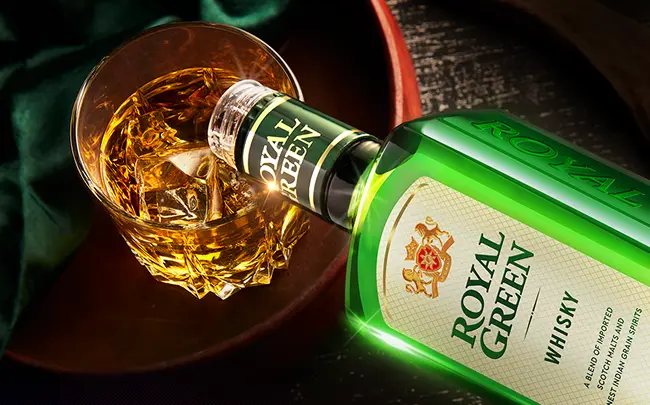
ADS Spirits Pvt. Ltd., incorporated in 2010 and part of the ADS Group of Companies, is engaged in the manufacture and marketing of liquor brands such as Royal Green Whisky, Double Blue Whisky and Episode Gold Whisky. In 2022, the company sought statutory protection for the word “OFFER” by filing Trademark Application No. 5514779 in Class 33, covering “alcoholic beverages, except beers; alcoholic preparations for making beverages.” The application was filed on a proposed-to-be-used basis.
On 18 November 2022, the Registry issued a First Examination Report raising objections under Section 9(1)(a), which prohibits registration of marks devoid of distinctive character. The objection was couched in boilerplate terms, describing OFFER as a common surname, personal name, geographical name, or non-distinctive geometrical figure, without specifying which-a formulation the Court later found itself to be indicative of non-application of mind. ADS Spirits responded with detailed submissions, arguing that although “OFFER” is an ordinary word, it is arbitrary in relation to liquor and therefore inherently distinctive. The company cited judicial precedents and examples of registered marks containing “OFFER.” Despite these efforts, the Registrar rejected the application on 30 October 2025, reasoning that the word lacked uniqueness. ADS Spirits appealed under Section 91 of the Act.
Argument in Favour
The appellant contended that the Registrar had misapplied Section 9(1)(a). The provision requires distinctiveness, not uniqueness or novelty. Distinctiveness must be judged in relation to the goods for which registration is sought. “OFFER” has no direct connection with alcoholic beverages, and a consumer encountering it on a bottle would perceive it as a brand name rather than a promotional statement.
The appellant also argued that the order was unreasoned, ignoring detailed replies, judicial precedents and examples of registered marks. Reliance was placed on Abu Dhabi Global Market v. Registrar of Trademarks (2023 SCC OnLine Del 2947), where the Court held that non-distinctiveness should not be found without evidence of other traders using similar marks. Other supporting cases included Oswaal Books and Learnings Private Limited v. Registrar of Trade Marks (2026 SCC OnLine Del 2362), where “ONE FOR ALL” was registrable for books, and Teleecare Network India v. Asus Technology (2019 SCC OnLine Del 8739), where “ZEN” was held arbitrary for mobile phones. The appellant also cited earlier decisions such as Mohd. Rafiq v. Modi Sugar Mills (1971 SCC OnLine Del 190), Evergreen Sweet House v. Ever Green (2008 SCC OnLine Del 1665), and Shivani Vig Kapoor v. Registrar of Trademarks (2023 SCC OnLine Del 8267), all affirming that ordinary words may be registrable if arbitrary in relation to goods.
Argument Against
The Registrar defended the refusal, arguing that “OFFER” is commonly used in commerce to seek discounts and is therefore promotional and not unique. Since the application was proposed-to-be-used, no evidence of acquired distinctiveness was provided. Reliance was placed on Venus Worldwide Entertainment v. Popular Entertainment Network (2023 SCC OnLine Del 5066), where “KHILADI” was held generic due to widespread use in films, and IHHR Hospitality v. Bestech India (2012 SCC OnLine Del 2713), where “ANANDA” was associated with peace and required proof of secondary meaning. The Registrar also cited the Supreme Court’s decision in Pernod Ricard India v. Karanveer Singh Chhabra (2025 SCC OnLine SC 1701), which held that generic or laudatory words commonly used in a trade cannot be monopolised, as seen with “PRIDE” in the liquor industry.
Court’s Decision
The Delhi High Court allowed the appeal, setting aside the Registrar’s order for two fundamental reasons. First, the order was unreasoned, failing to consider submissions, precedents and examples of registered marks. As a quasi-judicial authority, the Registrar must provide reasoned decisions. The Court cited I Am the Ocean v. Registrar of Trade Marks (2023 SCC OnLine Bom 3341) and Psychotropic India Ltd. v. Registrar of Trade Marks (2026 SCC OnLine Del 446), which held that cryptic orders cannot stand. Second, the Registrar applied an incorrect legal standard by insisting on uniqueness. Section 9(1)(a) requires distinctiveness, not novelty.
The Court explained the categories of trademarks: arbitrary and fanciful marks are inherently distinctive, suggestive marks are registrable without secondary meaning, descriptive marks require acquired distinctiveness, and generic marks are not registrable. Citing Disruptive Health Solutions Pvt. Ltd. v. Registrar of Trade Marks (2022 SCC OnLine Del 2002), which in turn drew on Bata India v. Chawla Boot House ((2019) 259 DLT 292) and People Interactive v. Vivek Pahwa ((2016) 68 PTC 225 (Bom)), the Court illustrated the imagination test and the spectrum of distinctiveness. Applying these principles, the Court held that distinctiveness must be judged in relation to goods. “OFFER” could be distinctive for liquor, just as “SUN” was registrable for lanterns in Mohd. Rafiq, “ONE FOR ALL” for books in Oswaal Books, and “EVERGREEN” for sweets in Evergreen Sweet House. The Court rejected the Registrar’s assumption that “offer” always means discount, noting that it signifies a proposal, not necessarily a price reduction, and is often accompanied by qualifiers such as “special offer” or “limited offer.”
The Court distinguished the respondent’s cases, noting that “KHILADI” was generic due to films, “ANANDA” was linked to peace, and “PRIDE” was widely used in liquor. No evidence showed “OFFER” was generic in the liquor industry. The matter was remanded to the Registrar for fresh consideration within four months, after affording the Appellant an opportunity of hearing and considering the material on record.
Conclusion
This ruling reaffirms that Section 9(1)(a) turns on distinctiveness, not uniqueness: common words may be registrable if arbitrary in relation to the goods for which protection is sought, and the Registrar, as a quasi-judicial authority, is duty-bound to issue reasoned orders that engage with the submissions and precedents placed before it. It bears noting, however, that the Court did not rule on the merits of whether “OFFER” is in fact registrable for alcoholic beverages -it has only set aside the impugned order and directed the Registrar to reconsider the application afresh, applying the correct legal standard, within four months. The judgment will nonetheless guide future examinations involving ordinary words, keeping the focus on a mark’s ability to function as a badge of origin rather than on subjective notions of novelty.