
For more intellectual property updates follow our WHATSAPP CHANNEL and SUNS LEGAL | LinkedIn
INTRODUCTION
The case Embassy of Peru v. Union of India & Ors., LPA 577/2025 (Delhi High Court, 18 March 2026), discusses whether two different countries can each claim exclusive rights over the same geographical indication (GI). The dispute relates to the term “PISCO,” an alcoholic beverage that both Peru and Chile identify as originating from their regions. The Court examined how granting exclusive rights to one country could mislead consumers, since the term has a shared historical connection with both nations. The judgment highlights the need to prevent consumer confusion and to avoid giving any country a monopoly over a term that has jointly developed significance.
FACTS OF THE CASE
The dispute began when the Embassy of Peru filed an application seeking registration of the GI “PISCO” for a grape-based alcoholic beverage. Peru argued that the term originates from a region in Peru and is derived from the Quechua word “Pisku,” meaning bird. It was further claimed that the beverage has been produced in Peru since the 16th century and possesses unique qualities linked to its geographical origin.
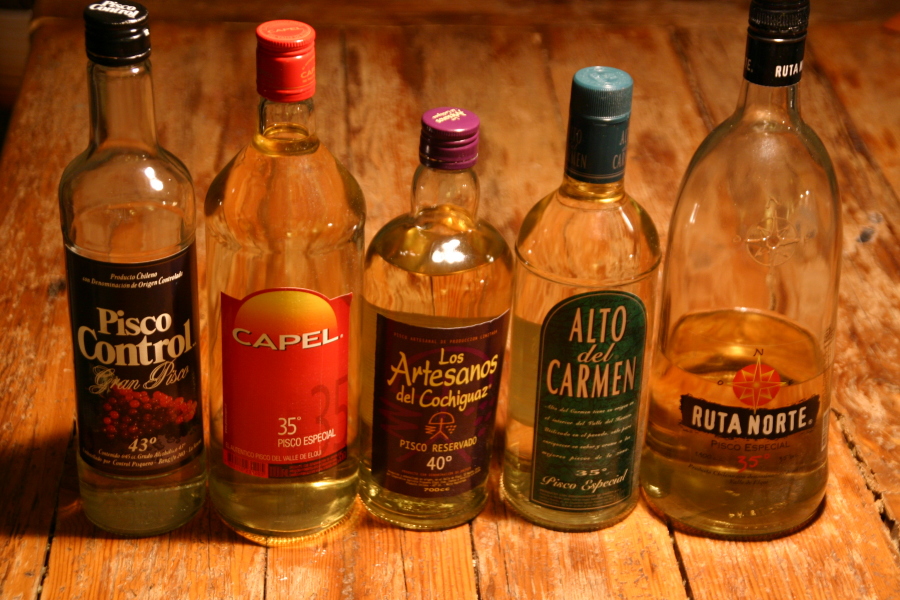
The application was opposed by the Asociación de Productores de Pisco A.G. (ADP), representing Chilean producers. ADP contended that “Pisco” has historically been produced in both Peru and Chile and that Chile has been manufacturing the beverage since at least 1873. They argued that the name is widely used globally to refer to Chilean products as well.
In 2009, the Assistant Registrar of Trade Marks held that both Peru and Chile use the term “Pisco” and that granting exclusive rights to Peru could lead to consumer confusion. Therefore, instead of granting the GI “PISCO,” the Registrar allowed registration of the modified GI “PERUVIAN PISCO” to avoid confusion.
Peru appealed this decision before the Intellectual Property Appellate Board (IPAB). In 2018, the IPAB allowed Peru’s appeal, dismissed Chile’s opposition, and granted Peru exclusive rights over the GI “PISCO.” The IPAB also held that Chile had misappropriated the name and attempted to create an artificial geographical link by renaming a town “Pisco Elqui.”
This decision was challenged by ADP before the Delhi High Court. In 2025, a Single Judge set aside the IPAB’s order and restored the Assistant Registrar’s decision. The Court held that Peru was entitled only to the GI “PERUVIAN PISCO” and not the standalone term “PISCO.” The Court also permitted Chile’s separate application for “CHILEAN PISCO” to proceed.
Aggrieved by this decision, Peru filed a Letters Patent Appeal before the Division Bench seeking exclusive rights over “PISCO.”
ARGUMENT IN FAVOUR
Peru argued that it has an exclusive right over the term “Pisco” based on its historical origin, geographical significance, and traditional production methods. According to Peru, the product has a strong and unique connection with its territory, and this link should entitle it to exclusive recognition. It also emphasized that many countries recognize “Pisco” as a Peruvian product, and therefore, India should follow a similar approach.
Peru further argued that granting it exclusive rights would not create confusion among consumers because informed buyers can distinguish between products based on origin and labeling. It contended that the decision of the Single Judge placed unnecessary reliance on international trade agreements and Chile’s commercial presence, rather than focusing strictly on the statutory requirements.
Additionally, Peru alleged that Chile had adopted the name “Pisco” dishonestly. It pointed to historical developments, including the renaming of a town in Chile to “Pisco Elqui” in 1936, to argue that Chile was attempting to artificially create a geographical connection to the term.
In support of its case, Peru relied on Khub Chand v. State of Rajasthan, AIR 1967 SC 1074, and Vijay Dhanuka v. Najima Mamtaj, (2014) 14 SCC 638, to emphasize that statutory provisions must be interpreted strictly and that mandatory conditions cannot be ignored.
ARGUMENT AGAINST
The respondents argued that Chile has been producing and exporting Pisco for more than a century and that the term is widely recognized worldwide in relation to Chilean products. They contended that granting exclusive rights to Peru would mislead consumers who associate “Pisco” with both countries.
They emphasized that even if a product satisfies the basic requirements of a geographical indication, registration cannot be granted if it is likely to cause confusion. According to them, the law places consumer protection above exclusive claims.
The respondents also argued that the history of Pisco production is shared between Peru and Chile. They pointed out that the regions associated with Pisco were historically interconnected, and therefore, it would be unfair to grant monopoly rights to one country.
They further relied on international trade agreements to show that Chilean Pisco is recognised globally, reinforcing their claim that the term is not exclusive to Peru.
In support of their arguments, the respondents relied on T.K. Mohammed Abubucker v. P.S.M. Ahamed Abdul Khader, (2009) 14 SCC 224, to argue that appellate courts should not interfere with well-reasoned decisions unless there is a clear error.
COURT’S DECISION
The Division Bench dismissed Peru’s appeal and upheld the decision of the Single Judge. The Court held that the most important factor in this case was the likelihood of confusion among consumers. Since the term “Pisco” has been used for a long time by both Peru and Chile, granting exclusive rights to Peru would inevitably mislead consumers.
The Court made it clear that where there is a real possibility of confusion, registration must be refused. It emphasised that the law is designed not only to protect producers but also to ensure that consumers are not misled about the origin of goods.
The Court rejected Peru’s argument that Chile had dishonestly adopted the name “Pisco,” noting that there was insufficient evidence to support such a claim. It observed that Chile’s use of the term is well established and has been recognised internationally for many years.
The Court also considered international trade agreements and global recognition of Chilean Pisco as relevant evidence. While such agreements do not directly determine legal rights under Indian law, they help in understanding how the term is perceived in the global market.
The argument that Peru alone should be granted the GI was further weakened by the shared history of the product. The Court recognised that both countries have long-standing associations with the term and that granting exclusivity to one would be unfair.
To address the issue of confusion, the Court supported the approach of adding a geographical prefix. It held that using the term “PERUVIAN PISCO” is an effective way to distinguish the product while still recognising Peru’s claim. This approach ensures that consumers can clearly identify the origin of the product without being misled.
CONCLUSION
The Delhi High Court’s decision in the PISCO dispute is a significant development in the law relating to geographical indications. The judgment makes it clear that even if a product has a strong historical and geographical connection to a particular region, exclusive rights cannot be granted if doing so would confuse consumers.
By allowing the use of “PERUVIAN PISCO” instead of granting exclusive rights over “PISCO,” the Court adopted a balanced approach. It recognised Peru’s legitimate claim while also acknowledging Chile’s long-standing use of the term. This ensures fairness for both parties and prevents any one country from monopolising a shared cultural product.
The decision highlights that the primary objective of GI law is not to grant monopoly rights but to ensure clarity, transparency, and fairness in the marketplace. In a globalised world where many products have shared histories across regions, this judgment serves as an important precedent for resolving similar disputes in the future.