For more intellectual property updates follow our WHATSAPP CHANNEL and SUNS LEGAL | LinkedIn
Introduction
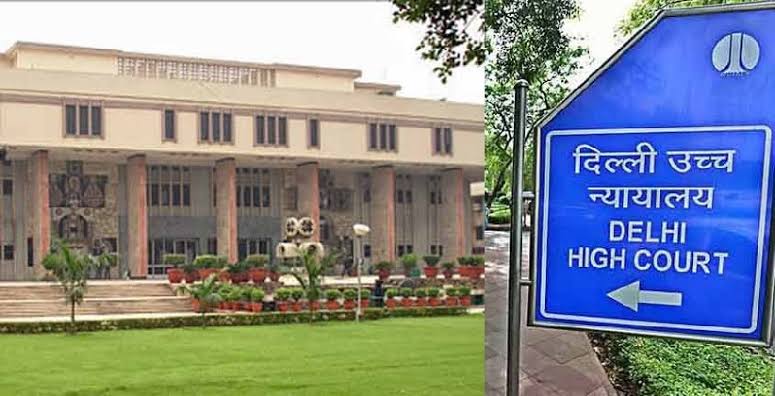
In T.V. Today Network Limited v. Global Weather Productions LLC & Ors. (CS(COMM) 738/2026), by an order dated 5 November 2026 in IA No. 18139/2026, Tejas Karia J. of the Delhi High Court granted an interim anti-suit injunction restraining a US company and five US residents from proceeding with a copyright suit they had filed against T.V. Today in a California federal court. The Court found the US suit prima facie vexatious and oppressive, as T.V. Today has no US business and the videos were prepared and published in India for Indian audiences.
Facts of the Case
T.V. Today, an Indian company in the India Today Group, operates channels including ‘Aaj Tak’ and ‘India Today Television’. Between 2022 and 2025, it published YouTube news reports on weather events and natural disasters outside India, scripted, edited, compiled and uploaded from India with its own narration, commentary and graphics.
Defendant No. 1, a US limited liability company, and Defendant Nos. 2 to 6, US residents (together, “the US claimants”), claim rights in audio-visual recordings of weather events. Defendant No. 7 owns and operates YouTube. Defendant No. 8, a former T.V. Today employee who assisted in drafting counter-notifications, is a proforma defendant.
On or about 5 March 2026, copyright complaints lodged at the instance of the US claimants led Defendant No. 7 to disable access to certain videos. T.V. Today filed counter-notifications under Defendant No. 7’s procedure, which required a declaration under Section 512 of Title 17 of the United States Code, including a standard-form jurisdiction clause prescribed by Defendant No. 7.
On 18 March 2026, the US claimants sued T.V. Today and Defendant No. 8 in the US District Court for the Northern District of California, alleging copyright infringement, removal of copyright management information and related claims concerning 42 videos. On 12 June 2026, the US claimants declined T.V. Today’s settlement proposal and prospective licensing arrangement.
T.V. Today’s suit seeks a declaration of non-infringement under the Copyright Act, 1957, protection against groundless threats under Section 60, a permanent injunction against further infringement notices, and an anti-suit injunction. Its interim application was filed under Order XXXIX Rules 1 and 2 read with Section 151 of the Code of Civil Procedure, 1908. Its prayer to stay its Section 512 declaration in favour of Defendant No. 7 was not pressed, and no substantive relief is claimed against Defendant No. 8, so the application was considered only against the US claimants. An advance copy of the suit was emailed to them on 10 July 2026, Defendant Nos. 2 to 6 were served afresh under an order of 21 August 2026, and Defendant No. 1 entered appearance before the Joint Registrar.
Argument in Favour
T.V. Today argued that consent given in its counter-notifications under Section 512(g)(3)(D) of the US Digital Millennium Copyright Act, 1998 was confined to takedown and restoration, not standalone infringement or copyright management information claims before the US Court. The jurisdiction clause was a mandatory, non-negotiable condition imposed by Defendant No. 7, not an agreement between the parties. All the acts challenged occurred in India, the evidence is here, and T.V. Today has no office in California.
On merits, it argued that the recordings depict natural weather events, such as storms and floods, not created by the US claimants, and copyright does not subsist in facts or events. The clips appeared for only a few seconds to report prevailing weather, which is fair dealing under Section 52(1)(a)(iii). It relied on Associated Broadcasting Company Limited v. Google LLC and Others (2026 SCC OnLine Del 815) and argued that the use was de minimis, citing India TV Independent News Service Pvt. Ltd. v. Yashraj Films Pvt. Ltd. (2012 SCC OnLine Del 4298), where trivial use causing no demonstrable prejudice was held non-actionable.
Relying on Oil and Natural Gas Commission v. Western Company of North America ((1987) 1 SCC 496), it argued that the US suit would place it in an inextricable situation, compelling it to defend editorial decisions taken in India under a law other than the Act. It also cited HT Media Limited and Another v. Brainlink International, Inc. and Another (2020 SCC OnLine Del 1703), where US proceedings were restrained as vexatious and oppressive because the plaintiffs’ rights arose in India and they did not carry on business in the US.
Court’s Decision
The US claimants did not appear and filed no reply. Noting that they had been duly served, the Court found them prima facie amenable to its jurisdiction, on the same reasoning as in HT Media, as their claims concern videos conceived, edited and uploaded from India for an Indian audience, and the takedowns’ consequences are suffered within its jurisdiction.
In ONGC, the Supreme Court held that courts may restrain persons within their jurisdiction from instituting or prosecuting foreign proceedings where the ends of justice require; the power must be exercised sparingly, with utmost respect for the foreign court, but restraint is warranted where refusal would be unjust and unreasonable. In HT Media, applying Modi Entertainment Network v. W.S.G. Cricket Pte. Ltd. ((2003) 4 SCC 341), the Court had held that an anti-suit injunction requires the defendant’s amenability to its personal jurisdiction, a finding that refusal would defeat justice and perpetuate injustice, and due regard to comity.
The only asserted US connection was T.V. Today’s use of YouTube and the counter-notifications’ jurisdiction clause. Prima facie, that clause was Defendant No. 7’s standard-form condition for contesting takedowns, not a negotiated forum choice, and it cannot alone shift the forum of a dispute arising entirely from acts in India. Continuing the US suit would create a real risk of conflicting decisions, which is oppressive under ONGC, and, as in HT Media, US proceedings against a party with no US business are prima facie oppressive where its broadcasts serve Indian audiences. Indian courts are therefore the appropriate forum.
The Court also found a prima facie case on merits. It noted that Associated Broadcasting, which involved US entities’ claims to weather footage in an Indian broadcaster’s YouTube news programmes, had held natural events and current affairs to be universal, non-imaginative and generic facts, and brief, segmented extracts within news narration to fall within Section 52(1)(a)(iii) and de minimis non curat lex, as explained in India TV. The record indicates use for only a few seconds in weather reports, and these averments remain uncontroverted.
With the US suit listed on 6 November 2026, refusing restraint would compel T.V. Today to defend in a forum with, prima facie, only a remote connection to the dispute. The balance of convenience favoured T.V. Today, which would suffer irreparable harm.
The application was allowed in these terms: until final disposal of the suit, the US claimants, their agents and representatives are restrained from proceeding with the California suit (Case No. 3:26-cv-02367-KAW), or instituting or filing any suit, application or proceeding before any court or Authority outside India concerning any issue forming the subject matter of the suit. The suit is listed before the Joint Registrar (Judicial) on 9 February 2027.
Conclusion
The Court prima facie found that Defendant No. 7’s standard-form jurisdiction clause alone could not shift to a US court a dispute arising entirely from acts in India, on the principles in ONGC and in HT Media (applying Modi Entertainment).
The order is interim and was passed after the US claimants, though served, did not appear. The Court made clear that its observations are prima facie and express no final opinion on the merits of the suit.