For more intellectual property updates follow our WHATSAPP CHANNEL and SUNS LEGAL | LinkedIn
Introduction
Trademarks are meant to protect the identity of a brand and give its owner exclusive rights. At the same time, the law must ensure that these rights do not unfairly restrict competition or prevent others from doing business. The case of PAS Agro Foods v. KRBL Limited and Others before the Kerala High Court in 2025 is a good example of how courts balance these concerns. The dispute revolved around the trademark “INDIA GATE” and whether PAS Agro Foods could challenge its registration in Kerala. The case raised two important questions: which High Court has jurisdiction to hear a rectification petition, and whether such a petition can be filed while an infringement suit is still pending.
Facts of the Case
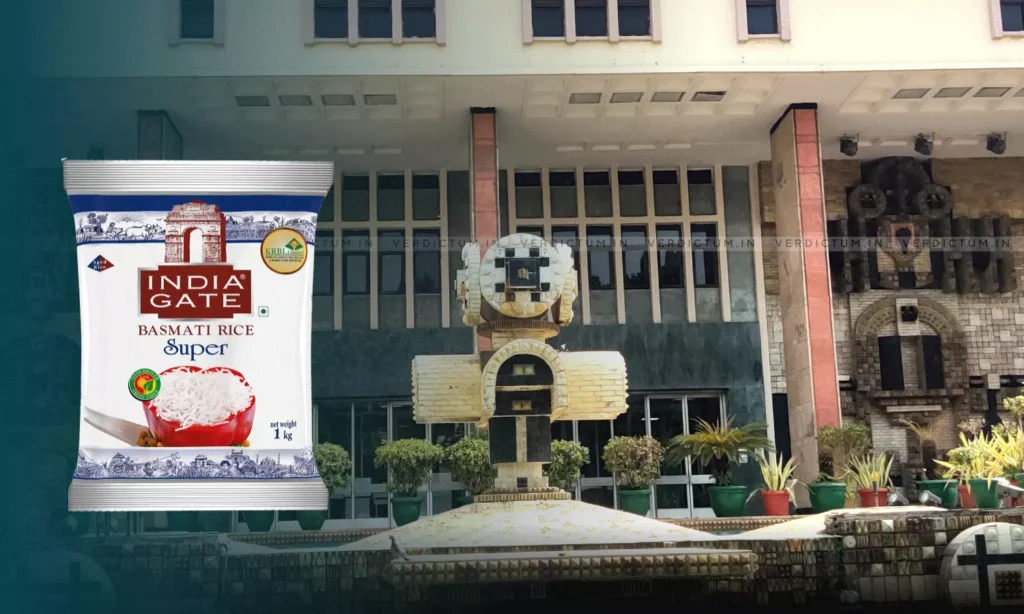
The trademark “INDIA GATE” was first registered in 1993 by Mr. Ram Pratap at the Trademarks Registry in New Delhi. In 2019, the mark was assigned to KRBL Limited, a company based in Delhi. In January 2025, KRBL filed an infringement suit in the District Court (Commercial) at Tis Hazari, New Delhi, against PAS Agro Foods and another entity. The suit was filed under Section 134 of the Trademarks Act, which allows trademark owners to bring infringement to certain courts. On 21 January 2025, the District Court granted a temporary injunction against PAS Agro Foods and appointed an Advocate Commissioner. On 27 January 2025, the Commissioner, with police assistance, seized goods and materials bearing the “INDIA GATE” mark from PAS Agro’s premises in Kerala.
Soon after, on 7 February 2025, PAS Agro Foods filed a Case before the Kerala High Court under Section 57 of the Trademarks Act and Section 50 of the Copyright Act, seeking cancellation of the “INDIA GATE” registration. PAS Agro also filed an application in the Delhi infringement suit asking for a stay until the Kerala case was decided. That application remained pending.
Arguments in Favour
PAS Agro Foods argued that the Kerala High Court had jurisdiction because part of the cause of action arose in Kerala. Their goods were seized there, and their business was affected locally. Section 57 of the Trade Marks Act refers generally to “the High Court” without specifying which one, and therefore, according to PAS Agro, the petition could be filed in Kerala. They relied on the Delhi High Court decision in Dr. Reddys Laboratories Ltd. v. Fast Cure Pharma [C.O. (Comm.IPD-TM) 8/2023], which had allowed rectification petitions in High Courts where the “dynamic effect” of registration was felt. PAS Agro also argued that their petition was not premature. They maintained that Section 57 gives them the right to directly approach the High Court for rectification without waiting for the civil court in Delhi to frame an issue on invalidity.
Arguments Against
KRBL Limited challenged the maintainability of the case on two grounds. First, they argued that only the High Court exercising appellate jurisdiction over the Trade Marks Registry where the mark was registered could hear rectification petitions. Since “INDIA GATE” was registered in New Delhi, only the Delhi High Court had jurisdiction. They relied on The Hershey Company v. Dilip Kumar Bacha [MANU/DE/0904/2024] and M/s. Woltop India Pvt. Ltd. v. Union of India [W.P.(IPD) Nos. 30 & 32 of 2024], both of which supported the view that jurisdiction lies only with the High Court linked to the Registry of registration. Second, KRBL argued that the petition was premature. Under Section 124(1)(ii) of the Trade Marks Act, when an infringement suit is pending, the civil court must first frame an issue on invalidity after finding the plea prima facie tenable. Only then can a rectification petition be filed in the High Court. They relied on the Supreme Court’s decision in Patel Field Marshal Agencies v. P.M. Diesels Ltd. [(2018) 2 SCC 112], which had laid down this mandatory procedure. They also referred to Steelcase Inc. v. K.J. Bhuta [Delhi HC, C.S.(Comm) 1180/2018] and M/s. Anugraha Castings v. Anugraha Valve Castings Ltd. [Madras HC, C.R.P. No. 2480/2025], which applied the same principle.
Court’s Decision
The Kerala High Court dismissed PAS Agro’s petition as not maintainable. On the question of jurisdiction, the Court held that only the High Court with appellate jurisdiction over the Trade Marks Registry where the mark was registered can entertain rectification of petitions. Since “INDIA GATE” was registered in New Delhi, the Delhi High Court alone had jurisdiction. The Court found persuasive the reasoning of the Madras High Court in M/s. Woltop India Pvt. Ltd. v. Union of India, which had interpreted the use of the definite article “the” in Sections 47 and 57 of the Act to mean that Parliament intended jurisdiction to be vested in a particular High Court. The Court also referred to Rule 4 of the Trade Marks Rules, 2017, which specifies that the appropriate office for rectification is the registry within whose territorial limits the proprietor’s principal place of business is situated. The Court rejected the “dynamic effect” principle from Dr. Reddys Laboratories Ltd. v. Fast Cure Pharma, noting that it could lead to chaos and conflicting orders if multiple High Courts entertained rectification petitions. The Court also noted that the Madras High Court’s order in Nippon Paint Holdings Co. Ltd. v. Suraj Sharma [A.No. 556 of 2024 in C.S.(Comm.Div) No. 7 of 2024], which had allowed transfer of rectification proceedings based on dynamic effect, was stayed by the Supreme Court in May 2024.
On the question of prematurity, the Court held that PAS Agro, being a defendant in the Delhi infringement suit, had to follow the procedure under Section 124(1)(ii). This provision requires the party to raise a plea of invalidity in the infringement suit, and the civil court must be satisfied that the plea is prima facie tenable. Only then can the party file a rectification petition in the High Court. Since the Delhi District Court had not yet framed such an issue, PAS Agro’s petition was premature. The Court relied heavily on the Supreme Court’s binding precedent in Patel Field Marshal Agencies v. P.M. Diesels Ltd., which had held that when an infringement suit is pending, rectification jurisdiction arises only after the civil court frames an issue on invalidity. The Court also referred to Steelcase Inc. v. K.J. Bhuta and M/s. Anugraha Castings v. Anugraha Valve Castings Ltd., which reinforced the same principle.
Conclusion
The Kerala High Court’s decision in PAS Agro Foods v. KRBL Limited makes clear that rectification petitions must be filed in the High Court linked to the Trade Marks Registry where the mark was registered, and not in any High Court where the effects of registration are felt. It also reinforces the mandatory procedure under Section 124 of the Trade Marks Act, which requires the civil court to first frame an issue on invalidity before a rectification petition can be filed. The judgment relied on binding precedent from the Supreme Court and persuasive reasoning from other High Courts, and it dismissed the petition as not maintainable. The case highlights the importance of following proper jurisdictional and procedural rules in trade mark disputes, and it shows how courts seek to avoid conflicting decisions and ensure consistency in the administration of trade mark law.