For more intellectual property updates follow our WHATSAPP CHANNEL and SUNS LEGAL | LinkedIn
Introduction
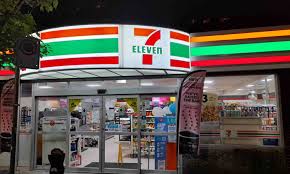
On 11th February 2026 the Madras High Court delivered its judgment in CMA (TM) Nos. 110 & 157 of 2023 between 7‑Eleven International LLC, the global convenience store chain, and Ravi Foods Private Limited, an Indian company. The dispute centered on the trademark “Big Bite,” used for food products in Class 30. The case raised fundamental questions about the territorial nature of trademark rights, the distinction between reputation and goodwill, and whether international fame alone can secure protection in India.
Facts of the Case
The dispute over the trademark “Big Bite” has its roots in the late 1980s. In 1988, 7‑Eleven International LLC, a global convenience store chain operating thousands of outlets worldwide, adopted the mark “Big Bite” for its food products. The mark was used internationally for items such as hot dogs, pizzas, and potato chips, and over time, 7‑Eleven secured registrations for “Big Bite” in multiple jurisdictions across the world.
Seeking protection in India, 7‑Eleven filed its first trademark application on 16 August 1994 under Application No. 636986 in Class 30, which covers food products like bread, biscuits, confectionery, and snacks. This application was advertised in the Trade Marks Journal in September 2007, but before registration could be finalized, opposition proceedings were initiated.
Meanwhile, an Indian company, Dukes Consumer Care Limited, filed its own application for the identical mark “Big Bite” on 19 July 2004 under Application No. 1297871 in Class 30. Dukes claimed use of the mark in India since 5 October 2004, and its application covered a wide range of food items including chocolates, biscuits, bread, pastry, confectionery, ice creams, and spices. This application was advertised in May 2005, and 7‑Eleven opposed it soon after.
Thus, by the mid‑2000s, two competing applications for the same mark were pending before the Registrar of Trademarks: one by 7‑Eleven, claiming international adoption and prior filing, and another by Dukes, claiming actual use in India. Both parties filed opposition against each other’s applications, leading to parallel proceedings.
On 18 July 2014, the Deputy Registrar of Trade Marks delivered a common order. The Registrar rejected 7‑Eleven’s application (No. 636986) and accepted Dukes’ application (No. 1297871). The reasoning was that Dukes, later substituted by Ravi Foods Private Limited, was the prior user in the Indian market, whereas 7‑Eleven had not established actual trade or sales in India at the relevant time.
Following this decision, 7‑Eleven filed appeals under Section 91 of the Trade Marks Act, 1999, which allows aggrieved parties to challenge orders of the Registrar. During the proceedings, Dukes Consumer Care Limited underwent corporate changes. In August 2023, it was renamed SWG Consumer Care Limited, and in January 2025, the mark was assigned to Ravi Foods Private Limited. Consequently, Ravi Foods was substituted as the respondent in the appeals.
The appeals were heard by the Madras High Court in January 2026, and judgment was delivered on 11 February 2026. The Court dismissed 7‑Eleven’s appeals, upheld the Registrar’s order, and confirmed that Ravi Foods was entitled to registration of the “Big Bite” mark in India.
Arguments in Favor
7‑Eleven argued that it had adopted the “Big Bite” mark internationally as early as 1988 and had filed its Indian application in 1994, well before Ravi Foods’ application in 2004. It claimed that its mark enjoyed transborder reputation, being known to Indian consumers through its website and international store presence. The company alleged that Ravi Foods adopted the identical mark in bad faith to exploit 7‑Eleven’s goodwill. To support its case, 7‑Eleven relied on several precedents. In N.R. Dongre v. Whirlpool Corporation (1996) 5 SCC 714, the Supreme Court recognized transborder reputation. In Milmet Oftho Industries v. Allergan Inc. (2004) 12 SCC 624, the Court held that prior adoption internationally could be protected, particularly in pharmaceutical cases. In S. Syed Mohideen v. P. Sulochana Bai (2016) 2 SCC 683, the Court laid down the “triple test” for passing off—reputation, likelihood of confusion, and damage. 7‑Eleven also cited Cadbury UK Ltd. v. Lotte India Corporation Ltd. (2014 SCC OnLine Del 367), which emphasized protection of established international marks.
Arguments Against
Ravi Foods argued that trademark rights are territorial and that reputation must be proven within India. It pointed out that 7‑Eleven had no business or sales in India before 2004, whereas Ravi Foods had been continuously selling products and investing in advertising since that year. The respondent stressed that mere visibility of a mark on a website does not create goodwill in India. To support its position, Ravi Foods relied on Toyota Jidosha Kabushiki Kaisha v. Prius Auto Industries Ltd. (2018) 2 SCC 1, where the Supreme Court held that reputation must be shown in India, not just globally. It also cited Starbucks (HK) Ltd. v. British Sky Broadcasting Group PLC (2015 UKSC 31), which held that goodwill requires actual customers in the jurisdiction. Other cases included Neo Laboratories Ltd. v. Medical Technologies Ltd. (2016) 2 SCC 672, reinforcing territoriality, and Intex Technologies v. AZ Tech (2017 DHC 1450), which stressed local use as the basis of rights.
Court’s Decision and Reasoning
The Madras High Court dismissed 7‑Eleven’s appeals and upheld the Registrar’s order. The Court emphasized that the territoriality principle prevails in trademark law. Relying on Toyota v. Prius (2018) 2 SCC 1, it clarified that international reputation alone does not establish goodwill in India. The Court distinguished between reputation, which is mere awareness of a mark, and goodwill, which requires an actual customer base and business presence in the jurisdiction. Since 7‑Eleven had reputation but no goodwill in India before 2004, it could not succeed.
The Court also examined Section 11(3) of the Trade Marks Act, which prevents registration if use of the mark would be stopped under the law of passing off. Passing off requires proof of goodwill, likelihood of confusion, and damage, as laid down in S. Syed Mohideen v. P. Sulochana Bai (2016). Because 7‑Eleven had no goodwill in India, it failed the test. The Court further noted that mere website visibility is insufficient, citing Starbucks v. BSB (2015 UKSC 31), which held that goodwill requires actual customers.
In addition, the Court stressed the importance of respecting the Registrar’s expertise. It referred to Procter & Gamble TM Application (1999 RPC 673) and Yorkshire Copper Works TM Application (1954 RPC 150), which emphasized judicial restraint in overturning findings of specialized authorities unless they are perverse. The Court concluded that the Registrar’s decision was consistent with law and evidence, and there was no ground to interfere.
Conclusion
The Madras High Court’s ruling in 7‑Eleven International LLC v. Ravi Foods Pvt. Ltd. (2026) reinforces the territoriality principle in trademark law. International fame alone does not guarantee protection in India; a company must show actual business, customers, and goodwill within the country. For 7‑Eleven, the absence of Indian operations before 2004 proved fatal, while Ravi Foods demonstrated continuous use and investment in the mark “Big Bite” in India, securing its rights.