For more intellectual property updates follow our WHATSAPP CHANNEL and SUNS LEGAL | LinkedIn
Introduction
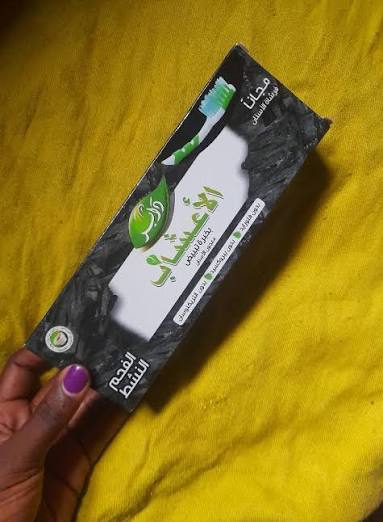
Can a company own the word “NEEM” in the toothpaste market? This question came before the Bombay High Court when Jyothy Labs Ltd., maker of “Neem Active Toothpaste,” accused Dabur India Ltd. of copying “NEEM” as the central feature of its new label, and sought an interim injunction to stop Dabur while the main case continued. The ruling tests how far a business can protect a word that is also the name of a well-known medicinal plant.
Facts of the Case
Jyothy Labs traced its use of “NEEM” to around 1920, when its predecessor began selling toothpaste under that name, later recording sales exceeding Rs. 162 crores and advertising spend of nearly Rs. 3 crores between 2002 and 2020.
It held three valid registrations for its toothpaste packaging (“label marks”), obtained in 2004, 2016 and 2018, none restricting the use of “NEEM.” Two older 1950 registrations had disclaimed the word but had lapsed long before.
In May 2020, Dabur applied to register “Dabur Neem Germ Protection Complete Care Toothpaste.” Jyothy Labs opposed the application, but Dabur began selling the product that December regardless, prompting Jyothy Labs to sue for a permanent injunction, with the present interim application to stop Dabur pending trial.
Argument in Favour
Jyothy Labs argued that Section 17 of the Trade Marks Act, 1999, governing how a composite label is read, did not stop it protecting the most prominent part of that label – “NEEM”- without a separate word registration. It submitted “NEEM” was suggestive, not descriptive: since neem appears in unrelated products like hair oil and fertiliser, linking it to toothpaste required a mental leap; and, regardless, over a century of continuous use had given the word secondary meaning tied exclusively to Jyothy Labs. It cited inconsistent conduct by Dabur – a small ingredient description abroad against a large, bold, central use in India – noting Dabur had sought registration of that label without disclaiming “NEEM” while enforcing its own rights over “MESWAK” and “BABOOL.” Its lapsed, disclaimed 1950 registrations were openly disclosed in the plaint, and other parties’ paper registrations, without proof of real use, did not weaken its rights or oblige it to sue every infringer.
Argument Against
Dabur countered that Jyothy Labs had no independent registration for “NEEM” alone, only the complete label, and Section 17 did not permit breaking a label apart to claim a single word. “NEEM,” it argued, was generic and descriptive under Section 9 – the common name of the Margosa tree, long used for oral hygiene – making “neem toothpaste” a category, like “decaf coffee,” not an indicator of one company. Dabur alleged suppression: Jyothy Labs had not disclosed that its 1950 registrations expressly disclaimed “NEEM,” and in 2017, responding to a Section 9(1)(b) objection, had itself described “NEEM” as descriptive and protectable only as part of the whole label – a position it could not now reverse. Citing a Nielsen survey of 22 neem toothpaste brands and widespread online listings, Dabur said the word was common to the trade under Section 9(1)(c); that high sales alone did not prove secondary meaning absent a consumer survey; that its own “NEEM” use was honest and descriptive under Sections 30(2)(a) and 35; and that there was no likelihood of confusion, since its packaging prominently carried its own house marks, “DABUR” and “Herb’l,” with green colouring and leaf motifs common across neem-based products.
Court’s Decision
The Bombay High Court ruled for Jyothy Labs, granting the interim injunction against Dabur’s impugned label, clarifying “no fetter” on Dabur using “NEEM” per se descriptively, and granting a six-week stay before the order took effect.
On Section 17, comparing a composite label as a whole does not prevent protecting the part most likely to stay in a consumer’s memory; too strict a reading would strip composite marks of real protection (Reckitt & Colman of India Ltd. v. Wockhardt Ltd. (Appeal No. 1180 of 1991); Brihan Karan Sugar Syndicate Pvt. Ltd. v. Lokranjan Breweries Pvt. Ltd. (2014 (3) MIPR 107); Saville Perfumery Ltd. v. June Perfect Ltd.; Jagdish Gopal Kamath v. Lime & Chilli Hospitality Services (2015 62 PTC 23); Ruston & Hornsby Ltd. v. The Zamindara Engineering Co. (AIR 1970 SC 1469); South Indian Beverages Pvt. Ltd. v. General Mills Marketing Inc. (2015 (61) PTC 231)).
Sections 30(2)(a) and 35 protect genuine descriptive reference only. Dabur’s small foreign use versus its large, central Indian use showed trademark use, its “suited to the Indian market” explanation being an admission (Sky Enterprise Pvt. Ltd. v. Abaad Masala & Co. (IA No. 1 of 2019); Hem Corporation Pvt. Ltd. v. ITC Ltd. (2012 (52) PTC 600); Marico Limited v. Agro Tech Foods Limited (IA (L) No. 28667 of 2025), distinguished). Nor could Dabur approbate and reprobate, having sought registration of the same label without disclaiming “NEEM” while enforcing “MESWAK” and “BABOOL” (Jagdish Gopal Kamath, above; Pidilite Industries Ltd. v. Innovation Coatings Pvt. Ltd. ((2025) 1 HCC (Bom) 390)).
Under the “imaginative leap” test, since neem also appears in unrelated products like hair oil and fertiliser, linking it to toothpaste requires such a leap, making it suggestive and protectable (Hygienic Research Institute Pvt. Ltd. v. Chandan and Shah Trading LLP (2025 1 HCC Bom 25); Bata India Ltd. v. Chawla Boot House (2019 SCC OnLine Del 8147); Bawaskar Technology (Agro) Pvt. Ltd. v. Anannya Agro Products & Ors. (Commercial Appeal No. 28 of 2025)). Alternatively, a century of use and strong sales gave “NEEM” acquired distinctiveness under the proviso to Section 9(1), with secondary meaning tied to Jyothy Labs alone (Godfrey Phillips India Ltd. v. Girnar Food & Beverages (P) Ltd. ((2004) 5 SCC 257)).
Paper registrations alone do not prove genuine third-party use, a burden Dabur failed to discharge since its Nielsen Report cited a company that did not then exist, defeating the “common to the trade” defence (Corn Products Refining Co. v. Shangrila Food Products Ltd. (AIR 1960 SC 142); Ripley v. Bandey ((1897) 14 RPC 591); Pankaj Goel v. Dabur India Ltd. (2008 (38) PTC 49)). There was no suppression since the lapsed 1950 registrations were disclosed in the plaint, and handwritten 1953 Registry notes, absent from the final certificate, could not restrict later, unrelated registrations (Sapat International Pvt. Ltd. v. Victoria International Pvt. Ltd. (2016 (65) PTC 499 [Bom]); Pidilite Industries Ltd. v. Jubilant Agri & Consumer Products Ltd. (2014); Sab Miller India Ltd. v. Jagpin Breweries Ltd. (2014)).
Dabur’s house-mark defence failed, since a house mark identifies the manufacturer while a product mark identifies the product (Meher Distilleries Pvt. Ltd. v. S.G. Worldwide Inc. (2021); CCE v. Kalvert Foods). Finally, Jyothy Labs established passing off through goodwill, misrepresentation via a deceptively similar essential feature, and likely damage (Laxmikant V. Patel v. Chetanbhai Shah (AIR 2002 SC 275); S. Syed Mohideen v. P. Sulochana Bai ((2016) 2 SCC 683); Reckitt & Colman v. Borden Inc.).
Conclusion
This ruling reaffirms that a company registering a complete product label may still protect the single word or feature within it that consumers are most likely to remember, without a separate registration for that word alone. It also draws a firm line against inconsistent legal positions – a business cannot claim a word as its own brand while, elsewhere, insisting the word belongs to no one. Yet the Court stopped short of a monopoly over “NEEM” in every context, confirming that honest, descriptive use remains permitted, it balanced a long-standing owner’s interests against other manufacturers’ right to describe their products truthfully – a careful application of established principles, while the dispute proceeds to trial.