For more intellectual property updates follow our WHATSAPP CHANNEL and SUNS LEGAL | LinkedIn
Introduction
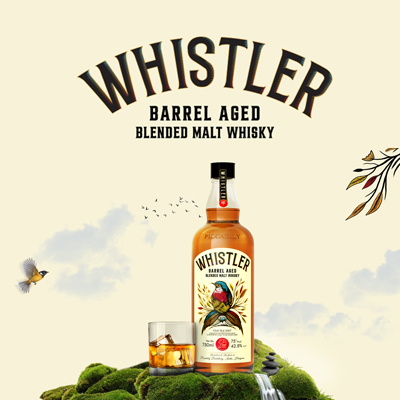
On 29 May 2026, the Delhi High Court in Robert A. Merry and Co. Ltd. v. Piccadily Agro Industries Ltd., CS(COMM) 1164/2025 & CS(COMM) 9/2026, delivered a significant judgment in a trademark dispute involving the mark “WHISTLER” used for whiskey. The case arose from two cross-suits filed by Robert A. Merry and Co. Ltd., an Irish company, and Piccadily Agro Industries Ltd., an Indian company. Both parties claimed exclusive rights over the WHISTLER mark, leading to a complex legal battle over passing off, infringement, and the concept of transborder reputation. The judgment is important because it clarifies how Indian courts apply the Territoriality Principle in trademark law and how prior international use interacts with Indian registrations under the Trade Marks Act, 1999.
Facts of the Case
The dispute traces back to 2005 when Robert A. Merry and Co. Ltd. first registered the trademark WHISTLER in the United Kingdom. In 2016, the company adopted THE WHISTLER and obtained registrations in several countries including Russia, Chile, Japan, South Korea, Taiwan, and Mexico. Despite its extensive global presence, the company did not hold a trademark registration in India. In 2008, Piccadily Agro Industries Ltd., an Indian company, applied for registration of the mark WHISTLER in India under Class 33, which covers alcoholic beverages. The Defendant commercially launched its whiskey in India in 2018, claiming inspiration from the Whistler Warbler, a bird native to the subcontinent. In 2025, the Plaintiff sought to sell its Irish whiskey in India through a distributor, Oberoi Spirits, and asserted that its global reputation had already spilled over into India. This led to the filing of cross-suits: one by the Plaintiff seeking an injunction against the Defendant for passing off, and the other by the Defendant seeking an injunction against the Plaintiff for infringement of its registered Indian trademark.
Argument in Favour
The Plaintiff argued that it was the prior adopter and user of the mark globally since 2005. It relied on the principle laid down in S. Syed Mohideen v. P. Sulochana Bai (2016) 2 SCC 683, where the Supreme Court held that prior user rights override registration. The Plaintiff also claimed that its enviable global reputation had spilled over into India through media, international awards, and trade publications, making WHISTLER synonymous with its brand among discerning consumers. In support, it cited N.R. Dongre v. Whirlpool Corporation (1996) 5 SCC 714, where the Supreme Court recognized protection of foreign marks with global reputation even without sales in India.
The Plaintiff alleged that the Defendant dishonestly copied its mark to encash on its goodwill, pointing to inconsistent claims by the Defendant about first use, ranging from 2007 to 2018, which it argued demonstrated a lack of bona fides. It further contended that the Defendant’s product was misdescribed as “Blended Malt Whiskey” though it contained grain spirits, violating the FSSAI Regulations, 2018, and thereby misleading consumers. In response to the Defendant’s infringement suit, the Plaintiff also argued that there was no likelihood of confusion due to stark differences in price and quality. Its Irish whiskey retailed at Rs. 2,800–11,000 per bottle, while the Defendant’s IMFL whiskey sold at Rs. 780. It relied on Radico Khaitan Ltd. v. Carlsberg India Pvt. Ltd. (2011 SCC OnLine Del 3925), where the Court held that price, composition, and consumer class are relevant considerations in disputes involving alcoholic beverages.
Argument Against
The Defendant emphasized its statutory rights as the registered proprietor of WHISTLER in India since 2008, which under Section 28 of the Trade Marks Act, 1999 grants exclusive rights to use and protect the mark. It relied heavily on the Territoriality Principle, citing Toyota Jidosha Kabushiki Kaisha v. Prius Auto Industries Ltd. (2018) 2 SCC 1, where the Supreme Court held that foreign reputation must be proven in India and mere global fame is insufficient. The Defendant argued that the Plaintiff had no significant presence in India before 2018 and failed to prove spillover reputation.
It contended that the Plaintiff’s documents, such as international invoices and post-2021 journals, did not establish meaningful reputation in India prior to the Defendant’s launch. The Defendant further argued that confusion was inevitable since the marks WHISTLER and THE WHISTLER were nearly identical and used for the same product. Under Section 29(2)(b) of the Trade Marks Act, infringement occurs when a similar mark is used for identical goods likely to cause confusion, and Section 29(3) presumes confusion in such cases. The Defendant also highlighted that in the liquor industry, where advertising is restricted, purchase decisions are driven by oral articulation of the brand name, creating a heightened risk of confusion regardless of price differences.
Court’s Decision
The Delhi High Court dismissed the Plaintiff’s application and granted an injunction in favour of the Defendant. The Court applied the Territoriality Principle, holding that foreign reputation must be proven in India. It found the Plaintiff’s evidence of spillover reputation insufficient to show goodwill in India before the Defendant’s 2018 launch, relying on Toyota Prius (2018).
The Court recognized the Defendant’s valid registration since 2008 and noted that under Section 29(2)(c), infringement occurs when a similar mark is used for identical goods causing confusion. Since WHISTLER and THE WHISTLER were nearly identical, confusion was presumed under Section 29(3). The Court rejected the Plaintiff’s argument that price differences prevented confusion, citing Renaissance Hotel Holdings Inc. v. B. Vijaya Sai (2022) 5 SCC 1, which held that near-identity of marks for identical goods warrants an injunction regardless of minor differences.
The Plaintiff had also relied on Milmet Oftho Industries v. Allergan Inc. (2004) 12 SCC 624, where the Supreme Court protected the “first in world market” principle in pharmaceuticals. The Court held Milmet Oftho inapplicable, noting that pharmaceuticals are different due to public health concerns, whereas liquor requires proof of local goodwill. Consequently, the Plaintiff was restrained from selling whiskey in India under WHISTLER or THE WHISTLER during the pendency of the suit.
Conclusion
The Delhi High Court’s ruling underscores the importance of territoriality in trademark law. While prior global use and reputation are relevant, they must be proven to have spilled over into India before a local competitor’s entry. The Court reaffirmed that Indian registration and local goodwill prevail unless strong evidence of transborder reputation exists. For Robert A. Merry and Co. Ltd., the absence of Indian registration and limited proof of spillover reputation weakened its case. Piccadily Agro Industries Ltd., with its 2008 registration and 2018 launch, successfully established infringement by the Plaintiff.
This case illustrates the delicate balance between global brand protection and local statutory rights, reminding foreign companies that Indian trademark registration and evidence of local goodwill are essential before entering the Indian market. It also highlights the judiciary’s consistent application of the Territoriality Principle, ensuring that Indian consumers and businesses are protected by domestic trademark law while still recognizing international developments where sufficient evidence of reputation exists.